Architecture guides and EventCatalog news
Practical guides to documenting distributed systems and the latest EventCatalog features.
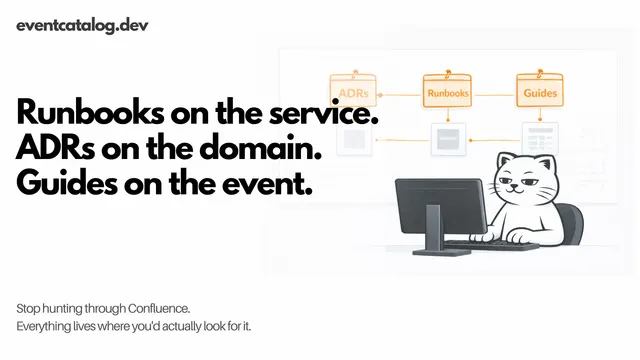
The right documentation, in the right place
Stop losing documentation in wikis and Confluence pages. Resource-level documentation lets you attach runbooks, ADRs, guides, and more directly to the services, events, and domains they describe.
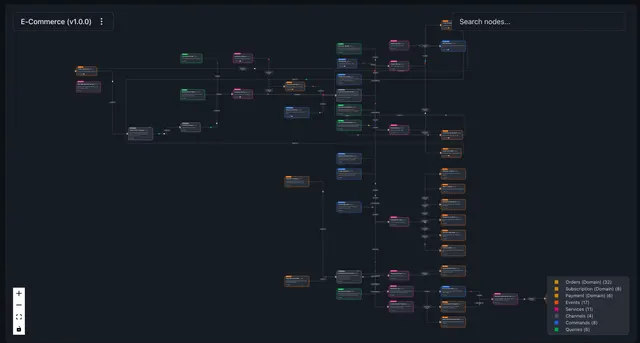
See your architecture clearly: Major visualizer improvements
The EventCatalog visualizer just got a complete overhaul. Cleaner nodes, smarter layouts, dark mode support, hover highlighting and more.
What's new in EventCatalog - January 2026
EventCatalog updates for January 2026
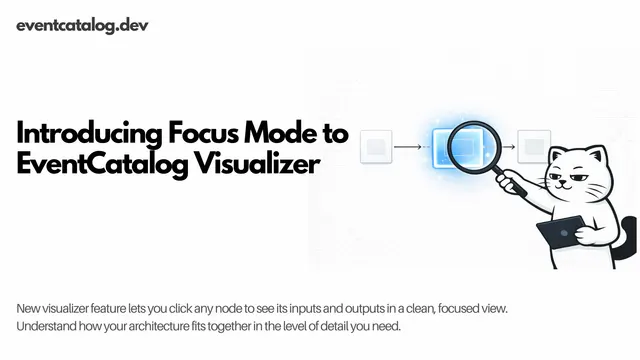
Click any node to explore its connections in Focus Mode
Navigate through your architecture by clicking nodes to see their inputs and outputs in a dedicated view
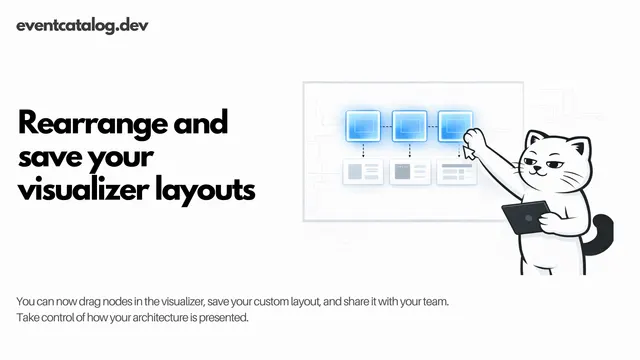
Rearrange and save your visualizer layouts
Take control of how your architecture diagrams look and share custom layouts with your team
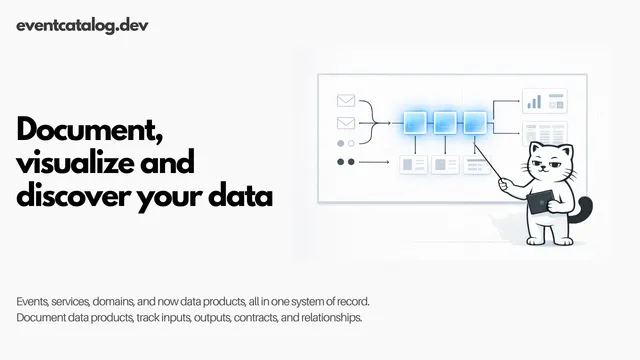
Document, visualize and discover your data products
Data products join EventCatalog as a first-class resource type with inputs, outputs, contracts, and full integration with your existing architecture.
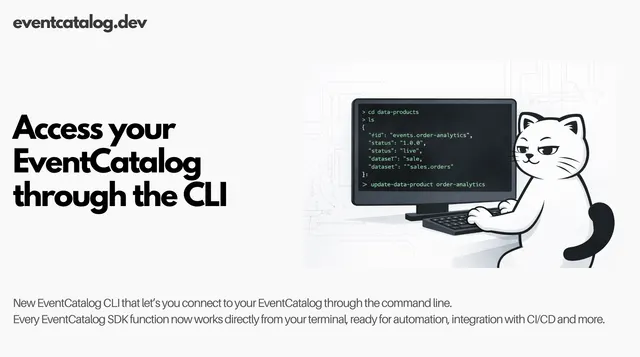
Access your EventCatalog from the command line
The EventCatalog SDK now includes a command-line interface, making automation and integration dead simple
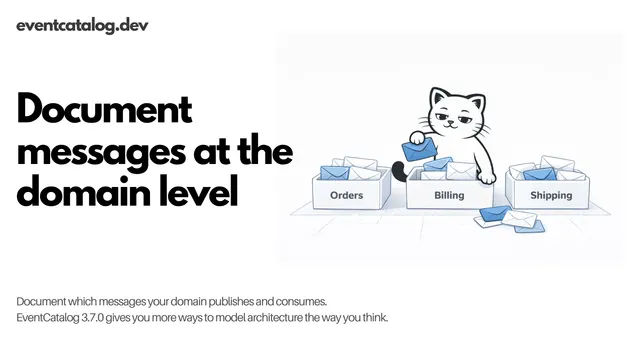
Document events at the domain level
Domain-level messaging gives teams more flexibility in how they model their event-driven architectures
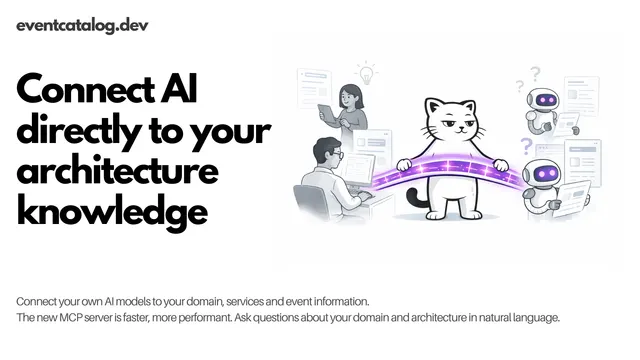
EventCatalog now includes a built-in MCP server
Connect AI tools to your architecture with 15 tools and 9 resources
Introducing diagrams as first-class resources
EventCatalog already gives you auto-generated visualizations: Entity Maps, Interaction Maps, and domain views that update as your catalog changes. These are great for understanding relationships between your resources.
Live data meets architecture documentation
Extend EventCatalog Assistant with custom tools to bring real-time metrics, service health, on-call information, and more into your architecture conversations